Virtualization, Cloud, Infrastructure and all that stuff in-between
My ramblings on the stuff that holds it all together
Monthly Archives: July 2009
Example Report from vCenter Chargeback
Posted by on July 16, 2009
The linked .PDF file is an automatically generated report from my test installation of the new vCenter Chargeback product.
I have set a cost per unit of £1 for all items (GHz, GB disk, network etc.) at this rate I can make £1.7k per day from renting out my virtual server platform at home 🙂
See an example report from my lab here
Anyone interested in renting a virtual machine at that rate please drop me a line 🙂
Problem with Installing vCenter Chargeback – cannot configure with SQL Windows Authentication
Posted by on July 15, 2009
I am setting a trial of the new vCenter Chargeback product on my lab environment, and have followed the instructions to configure the SQL database (new DB and new account with database owner permissions) however when I try to configure the Windows application I get errors from the jdbc component as follows;
“The user is not associated with a trusted SQL Server connection”
If I try with the appliance version of the application it ignores the slash in the DOMAIN\USER syntax for the database permissions and puts in DOMAINUSER, which obviously doesn’t work.
for now I have configured it using SQL authentication and that works ok isn’t ideal from a management point of view, would be good to understand why this is, as the appliance issue looks like a bug to me.
modl.fault.MethodNotFound error when adding ESXi host to vCenter
Posted by on July 14, 2009
I have been gradually rebuilding my home lab and adding a new HP ML115 G5 server (which is capable of running the new FT feature) as I plan to build an ESX inside ESX cluster to run an FT implementation on a single box (info on how to do that here).
Once I had installed my virtual ESXi hosts I ran into a problem trying to add them into vCenter as hosts, I kept getting an error modl.fault.MethodNotFound and an error about SSL certificates.
I tried several reinstalls, re-creating the VM and even a clean install of vCenter to no avail, following some twitter suggestions I downloaded a newer build of ESXi (build 171294) – and it worked 1st time. the build I was using was the one I downloaded on GA day (build 140815), so moral of the story is that it’s always worth checking the website for updated builds.
When you do this, it’s also worth updating to the latest vSphere client, I found some oddities in the UI that resulted in a red cross while trying to enable a VMKernel port to act as the FT logging interface.
I also have some problems enabling the VUM plug-in on that machine so hopefully a client upgrade fixes that.
It looks like all of the products (ESX-classic, ESXi, vCentre) have significantly updated builds released since GA.
Screenshot showing 3 x physical hosts and 2 x virtual ESXi hosts in a cluster – all managed by a single vCenter instance

How to Deploy a Windows 2008 Server From a Template with vSphere
Posted by on July 9, 2009
With ESX 3.5 and Virtual Centre 2.5 you needed to copy a bunch of sysprep files to use the excellent template deployment functionality (step by step account here)
Now that vSphere supports all the newer versions I had to update my Windows 2008 templates

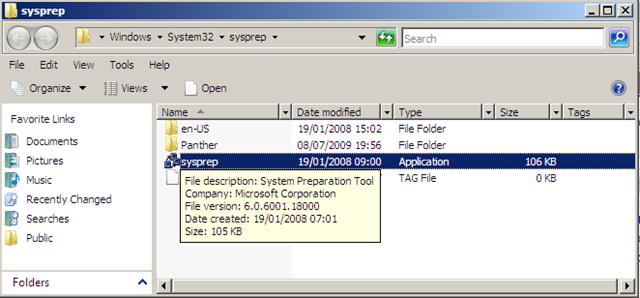
There has been some confusion over how you deploy Windows 2008/Vista from a template in vSphere Virtual Center 4.0 and have it sysprep’d ready for use. The good news is – you don’t need to do anything special; you don’t need to put sysprep in a particular directory on the VC box as in Windows 2008 & Vista as there is no longer a separate sysprep download, it’s built into the default Windows OS installation
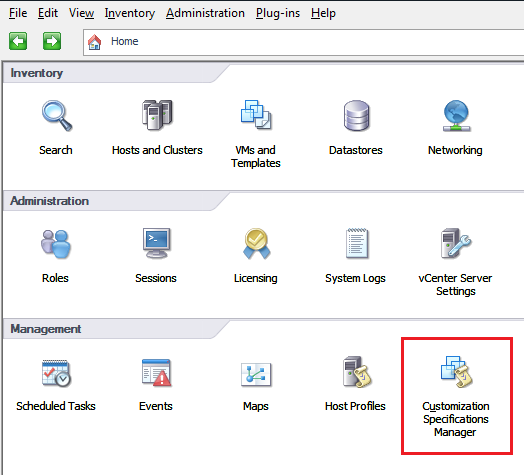
Just use the customization specification manager and it can even set the IP address of your new virtual machine as part of the template deployment.

Under the hood it injects a sysprep unattended/answer file into the OS as it boots and does all the customisations for you based on the specification you created/imported from vCenter 2.5
So all you need to do is get your master VM built with the OS, patched, VMtools installed and you can shut it down, convert to template and then just use the deploy from template wizard going forward.

Cloudcamp London July 2009
Posted by on July 9, 2009
Cloudcamp London is just winding down, it seems to be a lot smaller than the last London Cloudcamp and it’s in a smaller but much nicer venue (provided by Microsoft)
There were a set of lightning talks on various cloud topics, mostly on security in the cloud.
Some interesting thoughts from HP labs on on data obfuscation software as a way to better protect data in the cloud, some client side software that can encrypt and decrypt data from a service provider, almost it’s own man in the middle to translate data to/from the cloud.
Never store your data in the clear in the cloud but don’t rely on the cloud to do the encryption, it’s transparent to your apps and is prob he most agnostic approach too, an Amazon or Microsoft DB doesn’t care if the First Name field says “bob” or “"LpZ”
There was an interesting panel discussion that spent some time on the definition of cloud computing, there was a lot of bagging of the concept of private clouds not being “proper” cloud computing, it’s “just” virtualization.
That’s a favorite argument of mine and Joe Bagley from Quest software made a point that summarizes it better than my previous statements; “virtualization is just a technology, cloud is a business model” – to expand that further that business model can be applied equally to public facing services and internally facing services (inter-departmental, chargeback etc.) – it’s not all about internet scale gargantuan operations
Some breakout sessions from Cisco on IP NGN – Next Generation Network, applying tagging technology to ensure network state moves around the datacentre and globe with virtual server instances. “the network is not just the pipe”.
Rightscale were up next; SaaS gives you limited control over what you can do with your solution – PaaS/IaaS – total flexibility, rightscale add automation and management
Predictions over infrastructure sizing cost money = over-provisioning; opportunity cost, which is why cloud is so appealing to start-ups, lower barrier of entry… same principal can apply to the corporate world – cost of failure is smaller for off the wall ideas.
some examples of very peaky demand that they helped deal with on EC2;
- Animoto EC2 example 8 mins CPU for 1 min video, 25k sign ups per hour peak 4.7k EC2 instances
- Oscars Starcut, scheduling feature to bring up instances on a schedule
- Beijing olympics
- Eli Lilly — computational biology, grid in the cloud taking advantage of massive parallelism
CohesiveFT were up next (The discussion topics didn’t grab my interest this time round so I stuck with the vendor track as I needed to get a bit of market research in.
- Elasticserver.com – customize virtual (cloud) server build = likened to Dell website process for building a physical server
- Software factory, pick components – open source things like mySql, python etc. upload your own components, multiple OSes (open source)
- build, licence, market sell ISV solutions via portals
- output as EC2 or elastic hosts cloud
- or download VM in VMware/Xen/Parallels VM appliance – very cool
- community edition = free, personal or professional (paid-for
- they embed management hooks in the appliance back to elastic server service console
- On-premise versions going into beta soon, deploy as a VM appliance – nice
enStratus were up last David Bagley is an IaaS management offering
- managing infrastructure, security, reliability
- Interesting point made by a member of the audience; Amazon (+other IaaS)costs flex up and down with demand, managed services don’t map that way with most MSP, support is a fixed cost, no pay as you go
- Reason being you need people sitting there, a larger MSP should be able to do this as they have more diversity better risk/workload spread but costs don’t reflect that or have high barriers to entry.
All round a good event, bit smaller and less vocal audience than the last one I attended, if you get the chance I would definitely recommend checking out an event near you.

 Virtualization, Cloud, Infrastructure and all that stuff in-between