Virtualization, Cloud, Infrastructure and all that stuff in-between
My ramblings on the stuff that holds it all together
Daily Archives: February 21, 2008
Support for Virtualized OS/Applications – an Open Debate..
Posted by on February 21, 2008
Martin’s post here prompted me to blog something I’ve been meaning to do for a while.
Virtualization projects and services are cool; we all understand the advantages in power/cooling and the flexibility it can bring to our infrastructures.
But what about support, if you are a service provider (internal or outsourcing) you normally need to be able to offer an end-end SLA on your services. typically this would be backed off against a vendor like Microsoft or Oracle via one of their premium support arrangements.
From what I see in the industry, with most software vendors especially Microsoft there is almost no way a service provider can underwrite an SLA as application/OS vendors give themselves significant scope to say “unsupported configuration” if you are running it under a hypervisor or other VM technology… Microsoft use the term commercially reasonable in their official policy – who decides what this is?
I would totally accept that a vendor would not guarantee performance under a hypervisor – that’s understandable and we have tools to analyse, monitor and improve (Virtual Centre, MOM, DRS, increase resources etc.). but too many vendors seem to use it as a universal “get out of jail free card”.

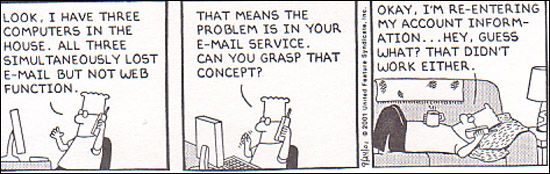
Issues of applications with dependency on physical hardware aside (fax cards, realtime CPU, DSP, PCI cards etc.) In my entire career working with VM technology I’ve only ever seen one issue that could be directly attributed to being caused by virtualization – and to be fair that was really a VMTools issue; rather than VMWare itself.
Microsoft have an official list of their applications that are not supported here – why is this? speech server I could maybe understand as it would probably be timer/DSP sensitive – but the rest? Sharepoint? I know for a fact ISA does work under VMWare as I use it all the time.
Microsoft Virtual Server support policy http://support.microsoft.com/kb/897613
Support policy for Microsoft software running in non-Microsoft hardware virtualization software http://support.microsoft.com/kb/897615/
Exchange is specifically excluded (depending on how you read the articles)
· On the Exchange Server 2007 System requirements page it only mentioned Unified messaging as being unsupportable in a virtual environment http://technet.microsoft.com/en-us/library/aa996719.aspx
· Yet on TechNet it is clear stated that “Neither Exchange 2007 nor Exchange 2007 SP1 is supported in production in a virtual environment” http://technet.microsoft.com/en-us/library/bb232170(EXCHG.80).aspx
Credit due to a colleague for pulling together the relevant Microsoft linkage
But I know it….
a) works fully – I do it all the time.
b) Lots of people are doing this in production with lots of users (many people at VMWorld US last year)
c) VMWare have a fully-supportable x64 hypervisor – It’s just MS that don’t
What is the industry going to do about this?, I asked this question of peers a lot at VMWorld and at BriForum; and to be honest everyone has the same concern but have a few different approaches;
Dont’ tell/ask – 99% of the time a tech support rep won’t know its running under VMWare/a.n.other hypervisor so why complicate matters by telling them – could of course back-fire on you!
Threaten – “If you won’t support under VMWare we’ll use one of your competitors applications”; however this only really works if you are the US govt. or Globocorp Inc. or operate in a very niche application market.
Mitigate – reflect this uncertainty in an SLA, best-endeavours etc. this would kill most virtualization efforts in their tracks for an enterprise customer.
The same support issue has been around for a long time; Citrix/Terminal Services, application packaging, automated installations, etc. are treated as “get out of jail free cards” by support organisations…
But whilst there are some technical constraints (usually only affecting badly written apps) with terminal services and packaging, virtualization changes the game and should make it simpler for a vendor to support as there is no complex runtime integration with a host OS + bolt-ons/hacks it’s just an emulated CPU/disk/RAM you can do whatever you like within it.
So – the open debate; what do you do? and how do you manage it?
Please comment…

 Virtualization, Cloud, Infrastructure and all that stuff in-between